

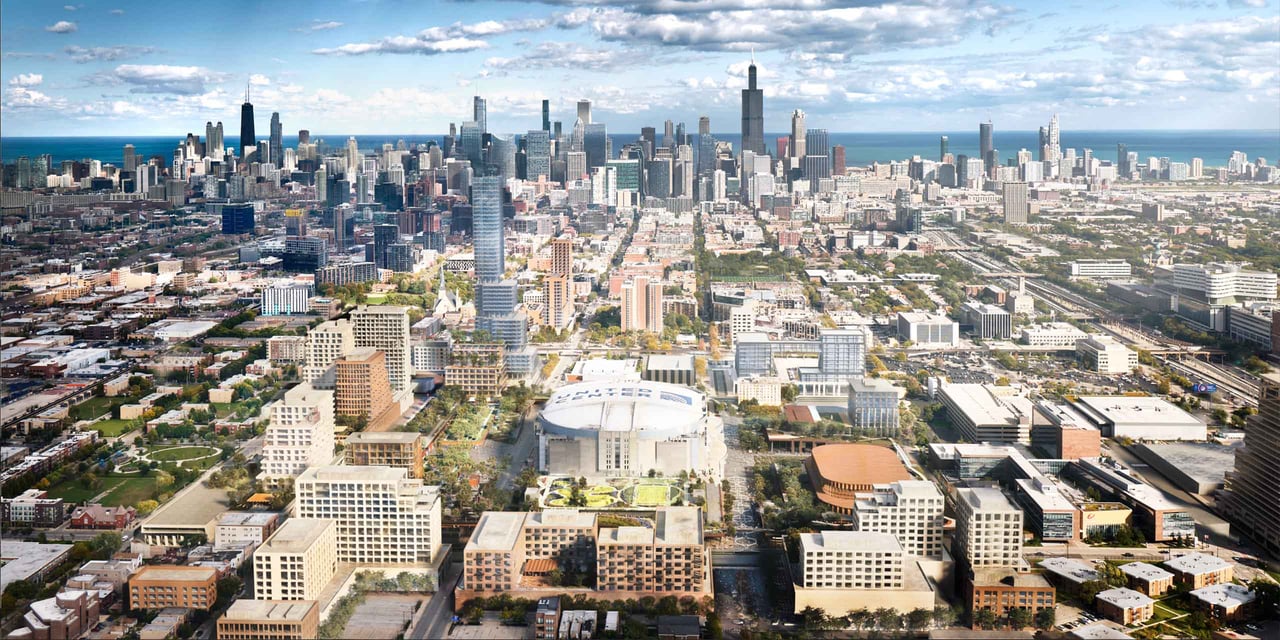
If you’ve been near the United Center lately, you’ve probably noticed the buzz. The 1901 Project, one of the largest private investments in Chicago’s history, is officially underway. After zoning approval earlier this year, construction on Phase One has already begun. This isn’t just another development—it’s a $7 billion transformation of more than 50 acres on the city’s West Side, and it will change the way people live, work, and invest in the area.
The plans are bold. The project will bring thousands of new residential units, with at least 20 percent set aside as affordable housing. A 6,000-seat music hall is already in the works, along with a hotel tower, retail shops, restaurants, and a ten-acre public park designed to connect the neighborhood with green space. Streets will be made more pedestrian-friendly, and discussions are underway about adding new transit options, including a possible CTA stop to improve access.
This is not a short-term project. Construction will take place in phases, and the full development may stretch into the 2040s. But even now, the impact is being felt. Early stages alone are creating thousands of construction jobs, with long-term estimates suggesting that more than 7,000 permanent roles could follow once everything is open. That kind of job creation always has ripple effects in housing demand, retail activity, and neighborhood vibrancy.
For buyers and investors, the opportunities are clear. Properties close to the United Center are already seeing stronger interest. Analysts predict that values within a half mile of the site could appreciate significantly in the next three to five years, as amenities come online and demand rises. Nearby communities like Tri-Taylor, South Austin, and Little Village are still more affordable compared to the West Loop, but that may not last. Just as Fulton Market and West Loop shifted dramatically over the last decade, the West Side is set for a similar story.
This doesn’t just benefit buyers. Sellers who already own property near the United Center may see their homes gain value as the project continues to move forward. Investors looking at rental income will also want to pay attention. With thousands of new jobs and entertainment venues planned, demand for both long-term and short-term rentals will likely increase.
Of course, big projects come with challenges. Traffic congestion, construction disruptions, and questions about how the community will adapt are real concerns. But overall, the 1901 Project represents a huge vote of confidence in the West Side. It signals that this part of Chicago is moving into a new era, one that blends sports, entertainment, housing, and commerce into a connected neighborhood.
If you’re thinking about where Chicago’s next wave of growth is happening, keep your eye on the United Center. The 1901 Project it’s redefining what it means to live on the West Side.